





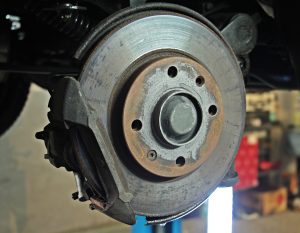
It’s very rare for a Chevy to experience serious brake problems. But without regular servicing and proper care, even the finest of brakes can develop an issue. One thing every driver should know is how to spot and respond to signs of brake trouble. If you experience any of the following issues, visit your local Chevy dealer immediately for brake repair.
5 Signs Your Chevy Needs a Brake Repair
Pulling to One Side When Braking
Each of your wheels has its own braking mechanism. If just one caliper malfunctions due to corrosion, dirt, a loose pin, or a trapped stone, you’ll often feel a slight pull to one side when you brake.
This means one side of your car has reduced stopping power. You’ll need to have the malfunctioning caliper cleaned or repaired.
Your Chevy Dealer Finds Uneven Pad Wear
Under normal driving conditions, brakes should be inspected twice a year. This should be done more often if you drive in severe conditions that require continual braking, such as heavy stop-and-go traffic.
While inspecting your brakes, a technician can often identify underlying problems by how evenly or unevenly the brake pads are wearing down. If one pad is wearing more slowly than the others, its caliper might be applying less pressure for some reason. This might be a caliper problem, a leaking hose, or something else.
Soft Sensation in the Brake Pedal
Your brake pedal should always feel firm underfoot. If you ever press down and it feels softer than usual, pull over and try to identify the problem.
Any softness or sponginess to the brakes often points to a brake fluid leak. Look for a yellow liquid along your brake hoses or pooling under your vehicle. Never drive if you suspect leaking brake fluid.
Unresponsive Brakes
If you press on the pedal and it feels firm, but your car isn’t slowing down as promptly as it should, then you might have overheating brakes. When overused, brake pads and rotors can reach up to 600 or 700 degrees.
At this incredible temperature, the resin in brake pads starts to melt, reducing friction. Even rotor discs can become damaged by such heat. If overheating ever happens to you, pull over and allow your brakes to cool. If they don’t return to normal function have a technician take a look.
Strange Sounds When Braking
Your first warning of brake issues will usually be a strange sound of some kind. A high-pitched squeaking or squealing signifies at least one worn-down brake pad that needs to be replaced. Grinding might mean a pad has worn down too far and metal is scraping directly on the rotor.
Grinding noises might also mean something’s trapped in a caliper: perhaps a loose pin or a stone. And a rhythmic thumping noise might be caused by warped rotors or faulty drum brakes.
Have your brakes inspected and repaired today at Tim Witt Chevrolet.
Connect with us


Archives
- 2022 Chevrolet Equinox
- 2022 Chevrolet Suburban
- 2022 Chevrolet Trailblazer
- Chevrolet Colorado
- Chevrolet Silverado 1500
- Chevy Finance
- Crivitz Chevrolet Dealer
- Crivitz Chevrolet Service
- Crivitz New Cars
- Crivitz Used Cars
- Food in Crivitz, WI
- Hiking in Crivitz WI
- Things to do in Crivitz, WI
- Tim Witt Chevrolet Service
- Uncategorized